Sometimes when you’ve lived with a chronic illness for a long time you generally “know the drill”. It almost seems that even when things get a little wonky, you are somehow able to pull yourself together (my favourite keyword: ‘adjust’) to get back on track. The normal types of stresses are quickly identified: work gets busy, you exercised a little too enthusiastically, etc., and dealt with appropriately (rest, prednisone etc.).
But then there are some things that unexpectedly hit you like a truck. It is stress you don’t have any control over. Your mind, heart and body don’t work well together anymore. Emotions and thoughts in the unconscious mind are in a constant swirl. Everything may be great and normal one minute, but can flip downward at any moment. So, how do you prepare? How do you prevent these constant changes beyond your control from making you sick? What do you do when you know you shouldn’t stress out, you know how you would normally deal with stress to prevent a flare, but now it’s out of your hands.
This is my recent state as of the past few months. Dealing with my own life change has led me down a path of uncertainty and fear. Uncertain of what the day may bring and fear that my body might rebel. I have not had a major flare in this time and I am grateful for it; surprised, but grateful.
My life is normal, yet not normal. I try to keep myself (super) busy by taking art, coding, and language classes. I’ve rearranged my apartment, and engaged in a little retail therapy. My downtime consists of insomnia, trying to keep my cat entertained (or trying to keep the cat from going berserk) and general “blah-ness”.
I’m doing my best. I’ve been meditating for 47 days straight (according to my trusty headspace app). Life throws a lot of things at you and you handle what happens as it comes. I don’t have any answers; everything is still fresh and very confusing. But taking it day by day has left me with this:
Whether you have control or not, whether the day is full of positives or full of negatives, or a foggy mess in-between, take it at your own pace and in your own way. No one can force you to go slower or faster as you work through what’s happened.
Whether you need a moment, a minute, a day, a week, a month or a year, trust that you’ll figure it out.
It has been a long time since my last post. The usual busy schedules and health-related maintenance (and holidays) have kept me from writing posts that I feel ready to post. I want to share some of the recent issues I’ve encountered, so this will be my longest post to date (lucky you)!
It should have been just another day…
While I was getting ready for a morning session of a conference in early December, I experienced a strange numbness and weakness. I thought that I was beginning a “fatigue flare” where moving is extremely difficult because I feel weighed down. But something felt very different. There was a weird jelly-like, tingling feeling in my face, legs and arm on the left side.
I figured that I would do my usual ‘lupus-remedy’ shower where I take a warm shower, sit down in the tub, let warm water loosen up my joints and do some self-massage.
It took me a good while to get to the shower and get in. I kept thinking that something felt very wrong. I wasn’t experiencing my usual lupus fatigue. I didn’t even have joint pain or stiffness.
I sat and massaged my legs (with my right hand), all while trying to figure out what I was feeling. It wasn’t clear to me. Was I really numb? Why was my left side feeling different from my right? Was I having a stroke? I wondered and wondered as I tried to bring my body back from where it had apparently disappeared to.
I did a “smile test” to see if I was in stroke territory (utterly useless exercise since I didn’t have a mirror in the hotel shower). I was in there for an hour, including several attempts to get up, but my strength wasn’t there. I literally thought to myself that I needed to somehow create some spoons out of the shower water because I had none. I basically woke up with one spoon, which was spent getting into the shower.
When I was finally able to get out and get dressed, I put on my sports bra because, in the back of my mind, I thought I would need to have an MRI or CAT scan. My intent was to get back home to NYC as soon as possible and get an appointment with my rheumatologist. This, I knew…was notthe right thing to do (calling 911 is the right thing to do!) , but I just wanted to be home. *again, don’t do this!*
I made it to the Amtrak station and changed my ticket to leave late morning. As I waited for the train, I called my rheumatologist’s office and left a message with the front desk. About ten minutes later, I was told not to get on the train and to get to an emergency room immediately.
I went, and ended up being admitted to a medical center for them to check me out.
What is going on, doctor?…
After getting through the triage area, I suddenly had another attack of the numbness and weakness I experienced earlier in the morning. I could no longer stand or walk. I was examined for stroke and the doctors were in contact with my rheumatologist. We discussed the fact that having lupus does put us at increased risk of stroke, especially if we have antiphospholipid syndrome.
In order to have the “Antiphospholipid Syndrome” someone must have the autoantibodies and also have had at least one blood clot or pregnancy loss. With respect to the brain, these autoantibodies increase the risk of forming a clot in a large blood vessel in the brain and causing a stroke.
I told the doctor that I’d previously been tested for lupus anticoagulant and anticardiolipin antibodies, and the tests (as far as I recall) were negative.
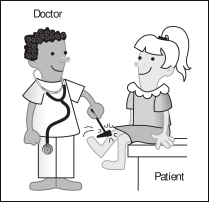
Everyone was puzzled. I felt like the type of patient that complains of something that can’t be seen. That I’m “taking up space” or a hypochondriac. It’s the kind of feeling many of us go through when we are getting diagnosed with lupus. The doctor did a few different tests: he softly touched various areas on both sides of my body and asked me if they felt differently from one another. He also had me do the “smile test“, open my mouth and stick out my tongue, and tested the strength of all four limbs (arms and legs). There was no visual lopsided issue with my face, but normal strength and sensation weren’t great on my left side.
This is a new thing to keep an eye on…
I had an MRI with contrast of my head and neck to check for any sign of stoke or inflammation in the brain. The tests were clear: no stroke, no inflammation. The doctor told me that I likely had an ‘atypical migraine’. More specifically, a hemiplegic migraine, where people experience weakness and numbness on one side of the body. I didn’t have a headache at the time, but I had been expecting a migraine since I had very tight neck muscles on my left side the previous two days.
When I was released from care, I made an immediate appointment with my neurologist.
The next day…
By the next morning, I was in my neurologist’s office in NYC recounting what had happened the previous day. During my examination, she did a pin-prick test, where she poked specific areas on both sides of my body to see if they felt the same. For example, she used a sharp stick to poke one area of my leg, say on the foot, and then pricked the same spot on the opposite foot. After each prick, she’d ask if I felt it and how the pain compared with the other side. She pricked my face, and several places on my arms and legs. I still had some numbness on the left side, but I was able to move around normally.
I ended up having a migraine headache while I was in the neurologist’s office, including a moment where I couldn’t put words together to speak. The doctor told me that these types of migraines (hemiplegic) could put me at risk for strokes and that I should begin paying attention to my pre-migraine symptoms and take medication to try to stop the migraine from progressing. She also ordered additional blood work to check for clotting factors that I could have. I got them done last week (12 vials people, they took 12 vials of blood!) I’m waiting for those results.
I usually attribute any weird sensations or things I experience to lupus since I consider it my “primary” problem, and the disease manifestations constantly change. I thought I may have begun to experience the neurological effects of lupus with stroke-like symptoms. Being hyper-vigilant in this way as a person with a chronic illness is probably normal. It is always important to check things out. In my case, it appears that this episode was unrelated to my lupus. I just need to pay some additional attention to these migraines.
Wow. I think it might be a month or so since my last post. While nothing really MAJOR has happened with me or my health, I’ve been trying to get more involved in lupus/patient events.
I’m very interested in (obviously) lupus awareness and education, but I am also generally interested in making patient’s lives better. While I have always been open about having lupus, I haven’t ventured into being involved in “outside things” more formally. I suppose this blog and my social media presence has been a start, but I also want to see how I can be more active in improving life for people living with chronic illnesses.
So for the past month or so, I’ve been taking more initiative to find out how I can contribute:
NYC Alliance for Lupus Research Walk with us
I walked in the 2015 NYC Alliance for Lupus Research Walk with us to cure lupus. 100% of the money raised through this walk goes to lupus research. This was my second year participating and it was great to see a lot of folks that day (which was sunny, but VERY cold).
I raised $1,290 (up from $750 the previous year), which I think was due to me sharing my blog. It proved to be a great way to have more conversations with people I don’t see very often.
Health conferences
I also attended interesting conferences about patient education/engagement and digital health. There are very cool things happening in the world of medicine and patient care. I’m very encouraged by the focus on patients and making sure we are involved in all aspects of changing healthcare and not only being the recipient of healthcare.
At the NYC MedicineX pop-up event I met some patient advocates, including Cyrena (an ePatient scholar with lupus) and Logan from Flaredown.com. I love the idea behind Flaredown. I hope this idea will catch on and I’ll get to use it soon. It’s developed by a fellow spoonie and really ‘gets it’ as far as what we need to track.
I feel so hopeful and positive after these events because it feels like people are paying attention to how patients live on a day-to-day basis and our value in improving the system of care. The word empathywas used many times in these conferences as far as making sure the entire healthcare system understands those of us who use it often: healthcare professionals, healthcare institutions, educational institutions (teaching doctors about empathy), researchers, and even insurers.
I hope to attend more of these types of events. It’s something positive for the spoonie community now and in the future.
It’s been about two weeks since my last post but I’m still here!
My brain and my body have been less-than cooperative. I’ve continued to be fatigued and in pain. Turtle-mode is my new speed (which I do not like very much). Oh have I been wishing for teleportation!
My energy is so low that more times than I’d like to admit, after I take a few steps outside, I wonder if I’m going to be able to get to where I need to be. When I walk home, labouring with every step, I can’t wait to collapse on the couch. What used to be short walks are now exercises in patience.
Lupus fog frequently has me either standing in my living room, unsure of what I am supposed to be doing, or struggling to find words. I also wonder if my mood has also been affected by the slow motion. It seems more difficult to muster the energy to be up-beat, (even though I’m not particularly sad), and maintain attention in conversations.
No matter how long I’ve been living with lupus, frustration still happens. I still grumble when I can’t move as fast or have to pull back from working out. I still feel self-conscious thinking that everyone is annoyed with my slow moving and slow thinking. That even my infrequent blog posts and decreased activity on Twitter would be noticed.
While I’m sure people who know me well might notice the changes, I know that everyone else is not focused on me. When I start to feel frustrated and self-conscious, I give myself calming pep-talks, focus on being mindful, and just try to get better.
I’ve always thought it was probably a good idea to know your family medical history, but until recently, it was never something to pay much attention to.
Because of a family history of breast cancer, I had my baseline mammogram at age 35. After seeing an OB/GYN this year for a checkup, she recommended that I see a genetic counselor given my family history. I didn’t think I needed to do that, but I thought it would be interesting.
During my meeting with the genetic counselor, I realized that I did not know ANYTHING about my family. The counselor peppered me with billions of questions:
“How many males and females on your mother’s/father’s side?
Are they full brothers and sisters?
If not, who are their parents and did they have any issues?
What about the children of your aunts and uncles?
When were they diagnosed?
Are they still living? What did they die of? When?”
And on and on.
Wait…I need to know all of that?
After that appointment, I called my parents and told them all that the counselor told me about determining the level of risk for developing something like cancer. We never talked much about family medical history. I’ve always kept tabs on the lupus connections, and I knew about a family history of breast cancer and glaucoma, but it wasn’t something I wrote down, and the information was always vague.
So after having this discussion with my parents, I uncovered some important information about members of my family from different generations and the illnesses they had. It got me thinking that I should be writing this down for my future children and their future children so that they have a full history and can provide their doctors with the right information.
Knowing helps with treatment decisions
Just to give you an example of how important it has been for me to know about my family medical history, I am treated for lupus with prednisone. Among side effects of prednisone (i.e.: weight gain), some people experience increased eye pressure. Years ago I went to my ophthalmologist because my eyes felt ‘funny’: tight, as if they were “full”. She checked the pressure in both eyes and it was high. If you have high eye pressure (intraocular pressure), you may develop certain eye problems like glaucoma if you are not treated.
The ophthalmologist was blown away that I could feel the increase in my eye pressure because it is not something that people can feel. My ophthalmologist asked if I had a family history of glaucoma, and I do, which puts me at a higher risk for developing it. With this information, my eye doctor and I came up with a plan to monitor me more closely, especially when my prednisone levels increase. Sometimes that means coming to see her every few days when the dose is high to check the pressure.
You learn something new everyday…
Recently, I saw another doctor to help me figure out how to control my weight since I go on this yo-yo of gaining and losing the same 40 pounds once or even twice a year, mostly linked to my prednisone dosage. I am not a perfect eater, but I make an effort and go to the gym a fair amount. I was frustrated that given my hard work, nothing was happening. The doctor asked me many questions, which included if there is a family history of diabetes. I shared with her that I did.
Items used to manage diabetes
She explained to me that there is a prednisone-insulin cycle that may be contributing to the difficulty losing weight, but also increasing my risk for developing diabetes. I’ll write it down verbatim as I am still working on understanding it:
Prednisone-insulin cycle:
Prednisone creates an insulin resistance which increases the concentration of insulin in the bloodstream. Insulin increases fat cells and fat cells create more insulin. Over time, this can lead to diabetes.
Yikes!
With these three experiences, I’ve felt the responsibility to gain more knowledge about my family history, including details about any health issues, because in addition to managing the lupus, these family health trends affect how I am treated and the follow-up care I receive.
Knowledge is power
Many people find it hard to talk about personal health issues in the family, mine included. Some people don’t feel comfortable revealing certain things because they are private matters and it’s “just not something we talk about”. I am trying to halt that cycle in my own family. There are just too many things that I need to know in order to manage my own health. Prior to being diagnosed with lupus, my parents never talked about the fact that mom had lupus. But afterwards, it became an open topic and also a bonding opportunity.
I may not get all of the information that I need since there are a lot of family members who are no longer with us, but it’s still worth a try to gather as much as I can for the sake of not just myself, but the entire family and future generations.
So, far from being a scary thing to uncover serious issues, knowledge is power. Make sure to share that knowledge with your doctors so that you get the care and monitoring you need.
Here are some templates I found online:
The U.S. Department of Health and Human Services (HHS)
This will be a short post, but I think it’s worth sharing at this point. Reflecting on the past few weeks since I’ve started this blog and my foray into social media, I wanted to say that I think we are an awesome community! I’ve read lots of twitter posts, blogs and am amazed and proud of us and what we are capable of despite having a (or multiple) chronic illness(es).
Encouraging words, story-sharing, tips, frustrations, and expressions of a wide range of emotions fill the comment boxes, twitter and instagram feeds. I’ve been participating in twitter chats and have “met” other like-minded e-patients, advocates and the like.
We deal with a lot and we probably don’t give ourselves enough credit when things aren’t going well. Here are the top 5 things that I think make us fantastic:
We can handle pain like no one else (“regular people” level 10 pain might be a “5” to us).
We have lots of seemingly random knowledge about things: medicine, supplements and resources.
We have more understanding of and empathy for others with illness/disabilities.
We are probably better equipped to handle stress than most. (So…you missed your train…meh! No big deal).
We go through all of this, but still manage to support each other and find some humour or silver lining.
So to my fellow spoonies and lupus warriors, a round of (gentle) applause, (gentle) hugs and (gentle) high-fives.
This song always gets me moving and feeling strong (the makeup is pretty fierce too):
“Shootin’ at the walls of heartache, bang, bang, I am the warrior! Yes I am the warrior and victory is mine! The warrior…the warrior!”
There is always a back-and-forth and a need to be flexible when you have lupus. Things change! I believe for many of us, there is a decision-making process that goes into many of our activities, especially when we are not feeling so hot.
I was thinking about this over the past week or so as I’ve been going through my own adjustments in physical activity.
The plan
On my continual quest to add regular physical activity to my lifestyle, there have been understandable bumps in the road. When I’m not in a flare, I plan to get to the gym 2-3 days a week. This does not include my “commuter walk” to and from the train station and home or work. However, when I am in a flare, the days at the gym are reduced or all together stopped. I have limited mobility in general, so even walking is not necessarily a given.
The situation
It’s been a rough few months in trying to get my lupus to settle down. I’ve stopped one medicine (methotrexate) and started a new one (tacrolimus), which is not yet at the right levels to manage my lupus. I’ve also been stubborn about increasing my dose of prednisone, which I know always helps to squash a flare quickly. (I finally took the plunge).
For the past few weeks, I have only been able to work out (maybe) one day a week. It’s better than no days, but the pattern was (and sometimes is) I go early in the week to “start off on the right foot” and then I am too ill to go back the rest of the week.
Making adjustments
Last Monday, I knew I was not at my peak, so I planned for a lighter workout. Usually I do the elliptical or the stationary bike for a good 30 minutes or so, followed by another 30 minutes of weight training (my favourite part). Knowing it probably wouldn’t be a great idea to do the usual routine, I did 13 minutes on the stationary bike at an easy pace, and worked out my arms.
The next few days were inflammation, more inflammation, pain and fatigue. I couldn’t believe that after all that thought I’d put in to making sure I didn’t cause my body too much stress, I was out of the game.
Making adjustments, again
When I started thinking about what I would do this week, I felt uncertain. Should I work out? I did a light workout last week and ended up having problems! How can I do some exercise without ending up in the same boat as the past few weeks?
I decided that I would try to do yoga or Pilates to see if that was less stressful (but really…they are verychallenging!).
Yesterday was my first day back to working out since last Monday’s light workout. I did a hatha yoga class and it was difficult (especially since it’s been a while since I did yoga), but I felt good.
Looking at my gym schedules I am going to try the Mind/Body classes and see if my body prefers those to machines for the time being. I’ll probably make adjustments again once I get a sense of how I feel after these classes. I do enjoy them, but I will listen to my body and do what it wants.
The truth is…
I don’t jump at the chance to be physically active. I would rather be at home, chillin’ on the couch. At the same time, I do like to be “athletic” and I know that keeping moving is good for my joints, my health, my mood and my ‘battle’ with prednisone.
Like anything in life, especially when you have a chronic illness, you continually learn, size up the situation, and make adjustments when necessary.
Body image can go through a ‘loop’ when you have lupus (insert dorky giggle here). But seriously, I struggle with my self-image sometimes (which is a self-esteem issue unrelated to lupus), and when I was put on prednisone after being diagnosed, I hated how the side effects made me look. I felt frustrated because I couldn’t control what changed with my appearance or how much it changed.
Weight gain while on prednisone is common and its other side effects are well-documented. In my case, prednisone increases my appetite, and distributes fat around my midsection and the back of my neck.
Not again!
Most likely if you are on prednisone and have lupus, your lupus is not under control. This means (for me) not being able to be very physically active or being very careful about the type, amount and intensity of physical activity I can handle.
Lately, I’ve been having a lot of difficulty with my lupus. I work out and feel good afterwards, but a day or two later, I am sore, but not the normal sore. I am inflamed. I am stiff. My joints ache and I am fatigued. It is hard to explain to others because they just think I am experiencing normal soreness after a workout. I have normal soreness too, but the rest is all lupus. I have ‘bear’ paws due to the inflammation which makes it hard to walk or do much with my hands. So I minimize my physical activity, which is frustrating when I am trying to lose some weight.
Copied from my Pinterest board. Heidi Rader stamped
At this point, I know I need to increase my dose of prednisone. I had been on 5 mg daily, and increased to 25 mg today, which I will taper slowly in order to get over this flare.
Other than needing to be on prednisone, lupus has affected my hair. I have a lot of thinning, especially by my temples. When I had a biopsy on my scalp a few years back, the dermatologist said my hair was thinning due to lupus and not medication. I’ve tried lots of things to cover up the thinning, but it is a challenge. I recently got my hair cut and coloured to help disguise the thinned areas.
While I’ve had lupus for a long time and ‘know the drill’, I still get frustrated with what happens with my body as a result of lupus and medicines used to treat it. But I also know that every person, whether or not they have lupus, has their own medical and self-image challenges.
All I can say is you are not alone.
I see and recognize you when your face is swollen, when you are using a cane or a wheelchair, or wearing a wig.
I see you when you are looking to be physically active and live a healthy life with lupus and have a few setbacks.
I know the frustration, but I also know that we are resilient.
So we’ll keep working and doing what we need to do to live a healthy life together. Consider sharing your feelings in support groups. I’ve shared a few below:
I took part in a twitter chat yesterday about patient-centricity. Several definitions were discussed, but they all described patient-centricity as a health system where the patient is the focus of care, where the patient’s world is taken into consideration, where collaboration is key.
It’s an important concept that those of us with chronic illnesses eventually come to appreciate (it’s not necessarily intuitive!).
Over the years I’ve become more comfortable with being my own advocate, speaking up, and building relationships with my doctors. It’s certainly not a one-way street. Doctors need to also be the advocate, listen and build the relationship.
I’ve ‘dumped’ doctors before because I felt bullied, I didn’t feel listened to, and I didn’t feel they were working with/for me. I kept information from them about my health because I didn’t trust them. It’s no fun (or productive) to have your concerns dismissed and feel that someone is talking down to you.
In a New York Times article this week, a doctor speaks to this issue of patients “doctor-shopping” and said that the patient is the driver of their health and that doctors should support the patient seeking what’s best for them. I say that’s part of it, but collaboration is key! Relationship-building speaks to collaboration, understanding and respect.
Doctors are not the only healthcare professionals with whom is it important to build relationships! Nurses, phlebotomists, receptionists, pharmacists…really anyone who is involved in your care! With chronic illnesses such as lupus, you will be in and out of medical facilities, likely meeting the same people over and over again. You never know when you will need their support and advocacy.
As patients, dealing with all of the different doctors, appointments, ER stays, medications (and on and on) can be overwhelming. But for me, I’ve felt that having great relationships (or at least respectful ones) takes the sting out of the constant poking and prodding, running around and keeping track of everything.
Just a few things:
Relationships are not built overnight. They need to be nurtured.
If you are afraid of your healthcare provider, think about why you feel that way and either express those feelings to your doctor (using “I” statements) or make a move. There’s no point in hanging on to a poor relationship.
Follow-up, don’t pester. Another key to building a relationship…no one wants a crazy stalker.



 exercise since I didn’t have a mirror in the hotel shower). I was in there for an hour, including several attempts to get up, but my strength wasn’t there. I literally thought to myself that I needed to somehow create some
  Everyone was puzzled. I felt like the type of patient that complains of something that can’t be seen. That I’m “taking up space” or a hypochondriac. It’s the kind of feeling many of us go through when we are getting diagnosed with lupus. The doctor did a few different tests: he softly touched various areas on both sides of my body and asked me if they felt differently from one another. He also had me do the “
 including a moment where I couldn’t put words together to speak. The doctor told me that these types of migraines (hemiplegic) could put me at risk for strokes and that I should begin paying attention to my pre-migraine symptoms and take medication to try to stop the migraine from progressing. She also ordered additional blood work to check for clotting factors that I could have. I got them done last week (12 vials people, they took 12 vials of blood!) I’m waiting for those results.

 upus Research Walk with us
 s about patient education/engagement and digital health. There are very cool things happening in the world of medicine and patient care. I’m very encouraged by the focus on patients and making sure we are involved in all aspects of changing healthcare and not only being the recipient of
 healthcare.





 y are private matters and it’s “just not something we talk about”. I am trying to halt that cycle in my own family. There are just too many things that I need to know in order to manage my own health. Prior to being diagnosed with lupus, my parents never talked about the fact that mom had lupus. But afterwards, it became an open topic and also a bonding opportunity.





 I say that’s part of it, but collaboration is key! Relationship-building speaks to collaboration, understanding and respect.
 the little wolf hunter